
At the event
Giving members of the public a taste
To teach a non-ringer, start with the backstroke and use another ringer to demonstrate how to hold the rope and what needs to be done.
Make sure that they are holding the rope in the right place, and tell them not to let go. Practice a couple of dummy runs by pulling the tail end up as if it were the bell ringing. Then try the real thing,
The instructor should resist the temptation of putting their hands on the backstroke above the pupil. This will prevent the pupil from feeling the bell. Most non-ringers will be able to ring the backstroke on their own in less than a minute.
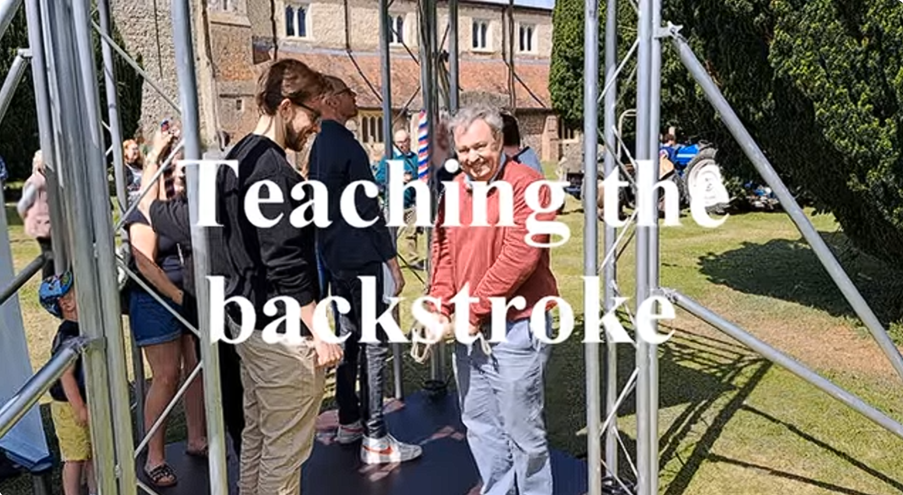
The pupil can then have a go at ringing rounds, with the instructor ringing the handstroke. If you teach on 2, 4 and 6, up three non-ringers can ring rounds at once.
If you have time, and no queue, you can then teach the handstroke. Best to start by catching with one hand, and the bell rung below the balance. Stress the need to start with the hand low, and come up to the sally as it rises. Not to hover higher. The instructor should place his hand below where the pupil needs to catch and tell the pupil to move his hand at the same time as the instructor.
Once the pupil can do this with one hand, move on to two.
Then explain about ringing to the balance point and the need to let go when their hands pass their waist when pulling off for the first time.
The pupil can then have another go at ringing rounds, with the instructor ringing the backstroke this time.
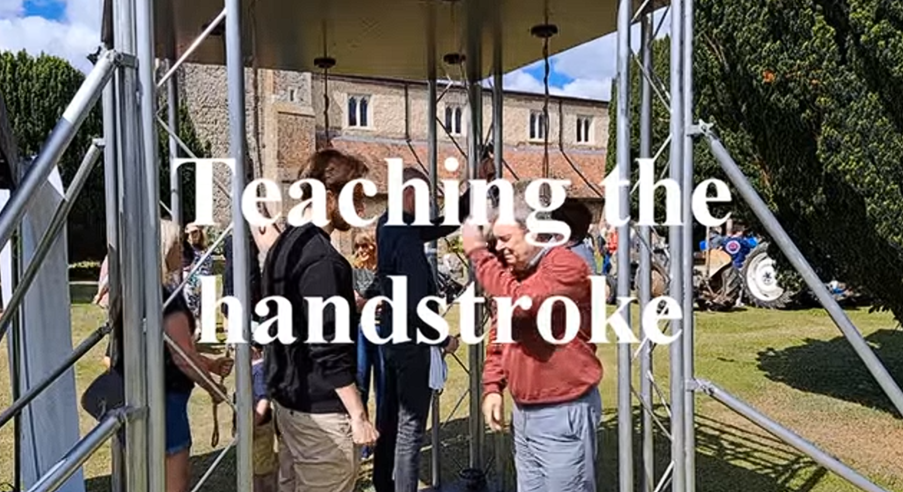
Please do not spend prolonged periods ringing single bells. This is not necessary, it does not sound good, and those watching will soon lose interest and walk away.
From time-to-time ring a demonstration touch with an experienced band. It does not need be long – 60 or 120 changes – This usually attracts a lot of attention, and you may then have a queue of people interested in having a go.
Health & Safety
The hirer will be responsible for cooperating with the Trust to ensure the health and safety of all concerned. Health and safety is a paramount consideration, and the hirer is advised to consult with the owner or manager of the land at an early stage.
Safeguarding
The Mobile Belfries Trust’s safeguarding policy is that If you are using the ring to recruit young people or vulnerable adults, local organisers are responsible for putting appropriate safeguarding measures in place. This includes ensuring that that there is no touching or inappropriate behaviour or remarks, and that the ringing is adequately supervised.
Insurance & Security
The Mobile Belfries Trust carries employers liability insurance with a limit of indemnity of £10M, and public/products liability insurance with a limit of indemnity of £5M. Our current certificate of insurance is available from our downloads page. If the mobile belfry is to be left up overnight, the hirer will be responsible for taking security measures which are to the satisfaction of the Trust and our insurers.
© All Rights Reserved. The Mobile Belfries Trust. Registered Charity # 1126164