Planning in advance
The Touring Tower and Lichfield Diocesan Mobile Belfry can be used outdoor throughout the year. The Charmborough Ring can also be used indoors, for example in shopping centres and for school activities days in school halls.
The primary purpose of mobile belfries area to take ringing out of the tower to engage with members of the public and raise awareness of ringing. If you also wish to recruit, it is best to have a plan in place beforehand.
Some excellent advice on recruiting new ringers, including a ten-point-plan is available on the Association of Ringing Teachers online portal: Recruitment and retention resources: Planning for success | ARTOnline. If you have not visited the portal before, you be asked to set up a username and password, but the resources are free.
Telling people just to go along to their nearest tower, or to find one on the Dove website or on a Guild/Association website does not work well. Most members of the public will not bother to visit a website afterwards. Flyers and leaflets are usually discarded. Also many towers do not practice regularly, or are not set up to teach new ringers well. Terefore you need to collect contact details, follow them up promptly and invite people to a taster session and course of handling lessons. Do have a look at the Big Ring Pull case study on our website.
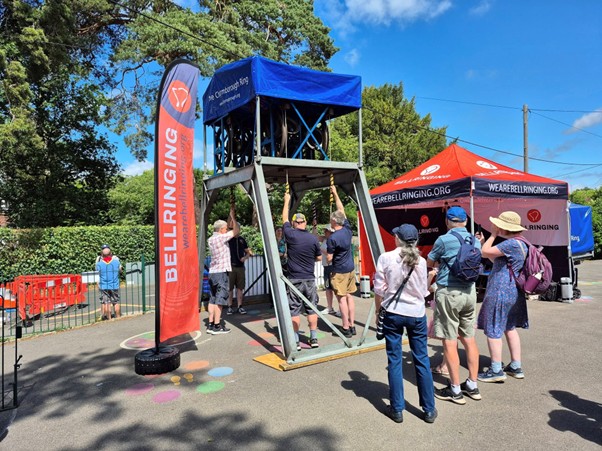
At most events you will get a lot of young people wanting to have a go. You may need a box or two, and it is safest if the very small children are given a go at chiming. Do get your young ringers group along to help. They will engage well with other young people.
Make sure that you give the parents a go and suggest that it is something that the family can do together. Also follow safeguarding guidelines. Make sure that you explain things carefully and avoid any unnecessary touching, or using inappropriate language.
Experienced ringers as helpers
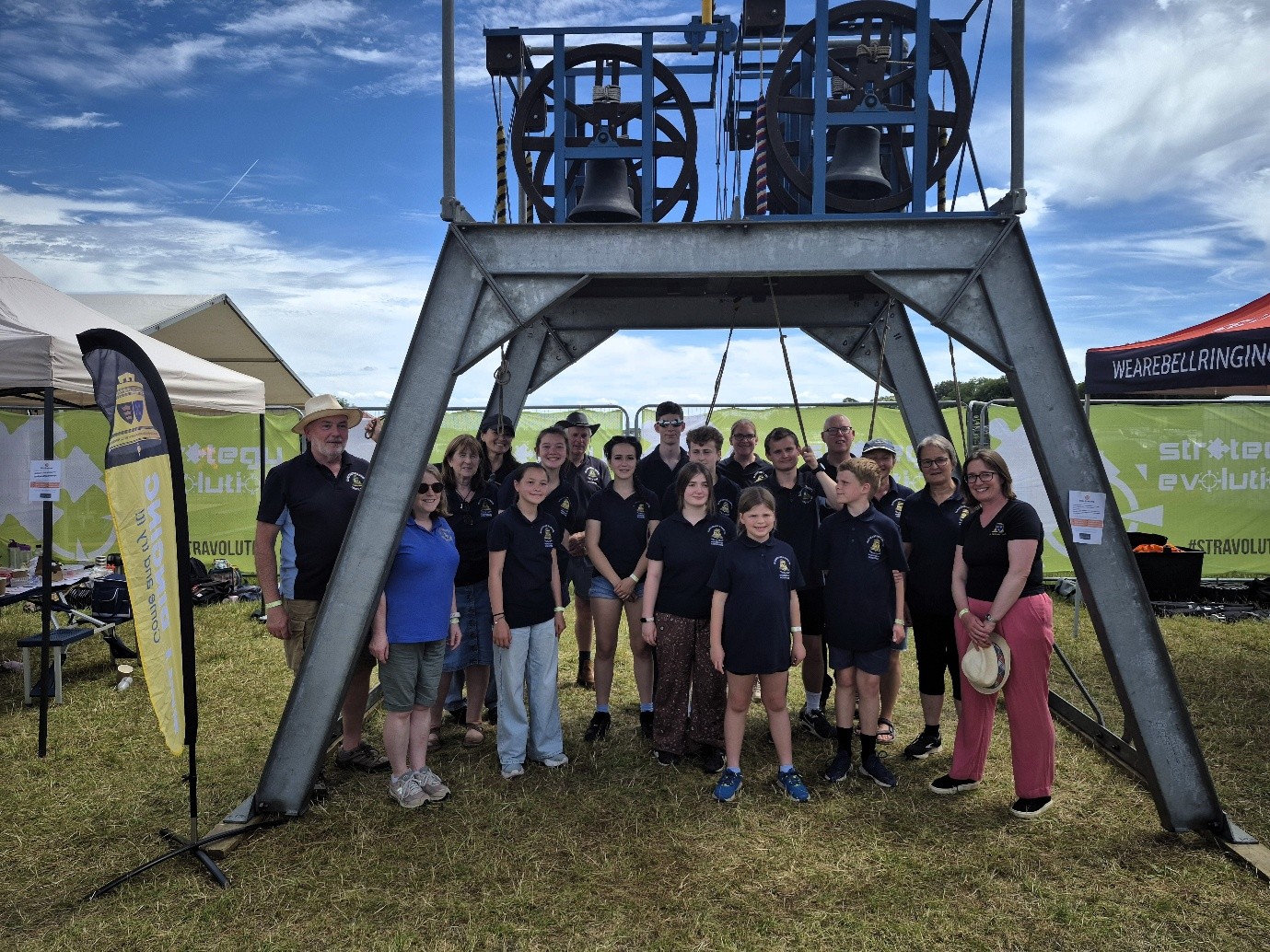
At all times throughout your event, make sure that you have at least six experienced ringers to man the ropes, plus another three to talk to members of the public and take turns manning the ropes. Nine is a minimum. The longer the event the more helpers you will need, with volunteers helping in shifts throughout the event.
As they are lighter than most bells, the volunteers should take a few minutes to practice getting used to the bells in the mobile belfry. There are no stays, so to stand just let the bells go over the balance at handstroke. Do not let them go over at backstroke (Someone will need to go up and re-rope them, and this will take up time).
If you’ve not rung on a mini-ring or mobile belfry before, it’s best to start on one of the heaviest bells. Begin by just ringing the backstroke, with someone who has rung on one before ringing the handstroke. Once you have got used to the feel of the bell, you can then start to ring the handstroke as well, and gradually move round to the lighter bells. The bells can easily be rung up with just one sharp tug on the sally.
It is perfectly safe for members of the public to have a go, under the supervision of an experienced teacher.
Talking to members of the public
Using a Mobile Belfry at an event to recruit new ringers is where the ringing moves from the realms of “Marketing” into “Sales”. If you are to maximise the opportunity, you do need to put some thought into selecting the right people to be at the “point of sale” and consider what support they will need. There needs to be a clearly articulated set of goals communicated to everyone involved so that, at the event, everyone understands what their contribution is going to be.
Just turning up on the day, won’t yield the desired outcome unless you have the right people to proactively identify and approach “customers” and then make a good “sales pitch” to deliver a lead to be followed up later.
With energetic, friendly, focussed proactivity, you can usually collect a list of at least 20 names in a day at a public event. There is a document with suggested ‘Talking Points’ and a ‘I would like to find out more’ form to use to collect contact details on our downloads page.
We usually find that these people come from quite a wide area. Therefore, those from outside your immediate area will need to be put in touch with a teacher and a local band. Your local Guild/Association/District/Branch should be able to help with this. There is also a contact form on the Discover bellringing – bellringing.org website where the Association of Ringing Teachers (ART) admin team can forward them on for you.
ART also runs a teacher training scheme for people to deliver the Learning the Ropes curriculum to new ringers. This is backed up with a dedicated website, regular newsletters, Facebook pages and a range of publications and workshops aimed at those learning to ring and teaching new ringers.


Site Requirements
Mobile belfries might be a source of irritation when bells are rung continuously for several hours. Go for a prominent site but remind the event organisers that the bells are nothing like as loud as full sized church bells, and supplementary chamois leather muffles can be used to quieten the bells further. At most events the noise of the ring is not usually an issue for neighbouring stallholders.
The site where the mobile belfry is to be erected needs to be reasonably level, and the hirer should obtain the permission of the landowner and check that there are no obstructions in the way. Please check the dimensions of openings and gates, and whether there are any overhead power cables.
The space requirements for the Charmborough Ring and the Touring Tower can be downloaded from our downloads page.
Do also look at our Booking Conditions and risk assessments for each ring for further details of the volunteers required and the time taken to set up and dismantle each mobile belfry.
© All Rights Reserved. The Mobile Belfries Trust. Registered Charity # 1126164